Lumo 7.8" - Air Sport Community

HANNspree Lumo in the Air Sports Community
The Challenge: Finding the Right Device for In-Flight Navigation
Pilots in the gliding and free-flight communities rely on mobile devices running navigation software such as XCSoar, EasyVFR, SeeYou Navigator and Co-Pilot. These applications act as flight computers, providing critical information such as GPS position and route guidance, Airspace awareness, Thermal tracking, Glide calculations and Flight logging. Suitable hardware to host these applications has historically been difficult to find.
The requirements to run these applications typically include excellent sunlight readability, fast screen refresh rates, long battery life, Bluetooth connectivity (for linking to flight instruments), and Wi-Fi for updates and data transfer. While specialist aviation devices exist, they are often very expensive due to their niche market. As a result, many pilots have adapted consumer electronics like smartphones, tablets, and e-readers to run flight software, and to date, these devices have had limitations for piloting applications.
Discovery: The Lumo Hits the Sweet Spot
After purchasing the HANNspree Lumo, early adopter, Stewart Reid, noted that Lumo meets many of the key requirements for flight navigation:
“The requirement has been for an affordable, efficient sunlight readable device that can deal with fast refresh rates and ideally colour that can run Android… Lumo hits the mark.”
Key features noted by Stewart that make the Lumo appealing include:
Highly readable display in bright sunlight
Efficient power usage for long flights
Android OS compatibility with existing flight software
Bluetooth connectivity for linking with instruments
Wi-Fi connectivity for updates and downloads
Many pilots currently rely on tablets such as iPads for navigation, but Stewart suggests that:
“Lumo could be better than an iPad for this application.”
Test flights: Does Lumo perform in the Air?
To validate the HANNspree Lumo Paper-like Tablet in real flying conditions, experienced glider pilot, Stewart, gave his feedback on using Lumo in a gliding environment.
Firstly, Lumo was configured with a range of widely used flight navigation applications, including XCSoar, SeeYou Navigator, and EasyVFR. Installation followed a standard Android process and was described as quick and straightforward. For connectivity, Lumo was paired via Bluetooth with onboard flight instruments and connected to mobile data through a 4G Wi-Fi tether, enabling live data access in flight.
Stewart tested Lumo across three flights in sunny conditions, all conducted in a glider cockpit. During these flights, Lumo was connected via Bluetooth to an LX Nav S100, providing accurate real-time flight data integration.
Of course, visibility in bright conditions is critical in glider cockpits. Stewart commented that Lumo's RLCD display performed very well in direct sunlight, significantly better than OLED screens and comparable to E-ink in readability, while offering far more usable colour, enhancing navigation mapping and airspace awareness during flight.
Lumo’s display refresh rate proved more than sufficient for real-time tracking, outperforming typical E-ink devices which can lag or suffer from ghosting. Lumo delivered smooth, responsive performance throughout testing.
Stewart noted that further evaluation in colder winter conditions would be valuable, as this can affect display technologies, so watch this space for more on how Lumo performs in a variety of weather conditions.
Lastly, Stewart reported that battery performance was strong, with Lumo lasting through a three-hour flight with capacity remaining. While typically connected to the glider's power system as a backup, the internal battery provides reliable standalone capability.
Comparison with Other Devices
Lumo addresses several limitations which Stewart has found in commonly used alternatives:
Google Pixel 7 / Google Pixel 8 (OLED smartphones)
Struggle in bright sunlight, are prone to overheating in cockpit conditions, and consume battery quickly during long flights.
Adapted Kobo E-ink devices
Readable in sunlight but prone to ghosting in cold conditions and instability due to non-standard Android implementations.
Hisense Colour E-ink devices
Good overall performance, but with less vibrant colour than the Lumo. Limited Google Play support also introduces security and stability concerns, which can be problemmatic in critical use.
Summary:
Real-world glider testing has proved that the HANNspree Lumo demonstrates a strong balance of visibility, responsiveness, and reliability. Its RLCD display and full Android compatibility address many of the long-standing limitations of OLED and E-ink devices in cockpit environments.
Looking Ahead: A Potentially Large Untapped Market
With further real-world testing planned, the Lumo could prove to be a high-value alternative to specialised aviation hardware for pilots seeking a readable, efficient, and affordable navigation display.
Lumo may open up a new niche market in recreational aviation and flight navigation. Stewart points out that the potential user base is significant.
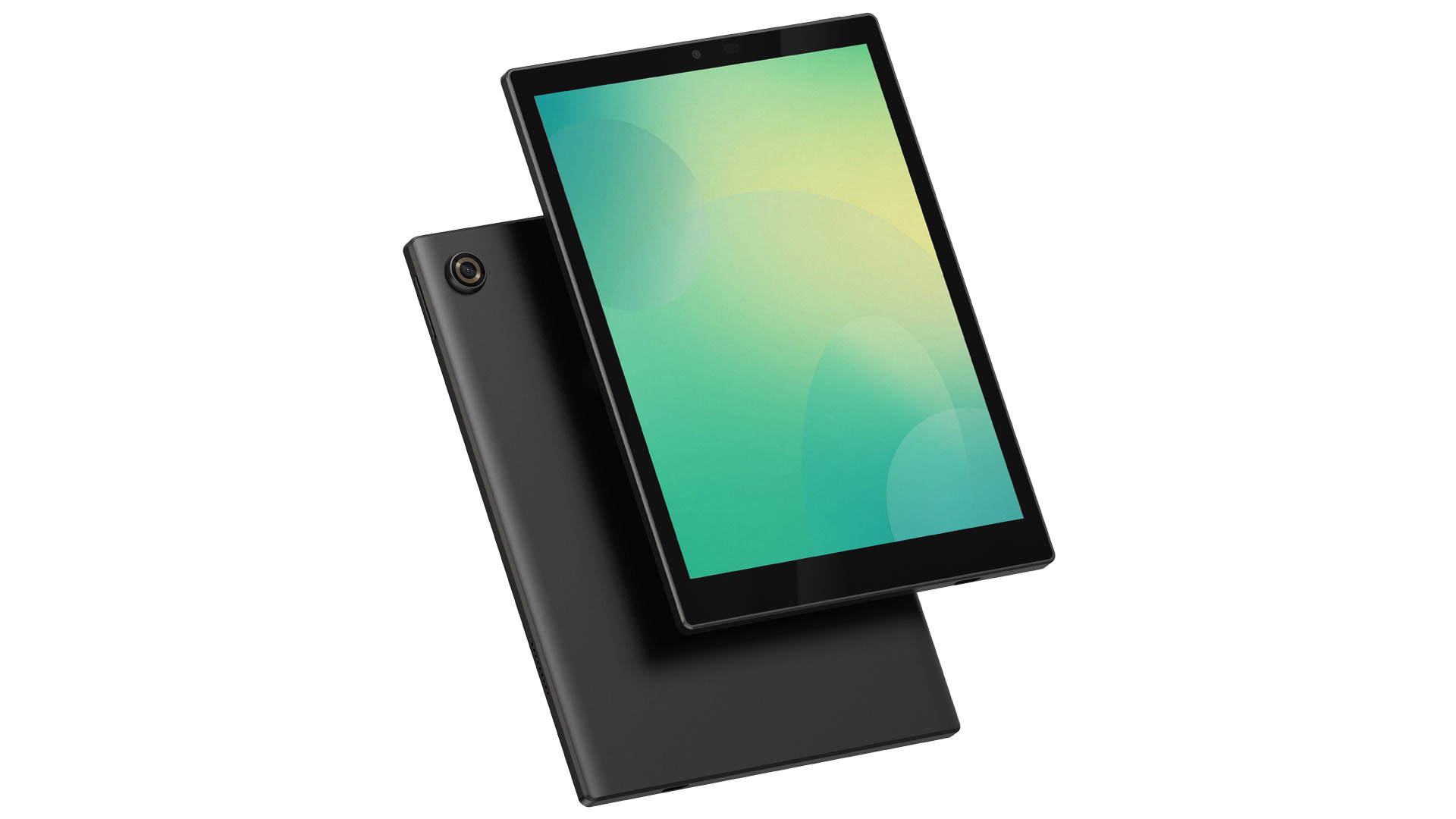
Lumo 7.8 Reader Tablet
SN08HD1B